DESIGNING A E-COMMERCE EXPERIENCE FOR JEWLERY
DESIGNING A
E-COMMERCE EXPERIENCE FOR JEWLERY
Intro
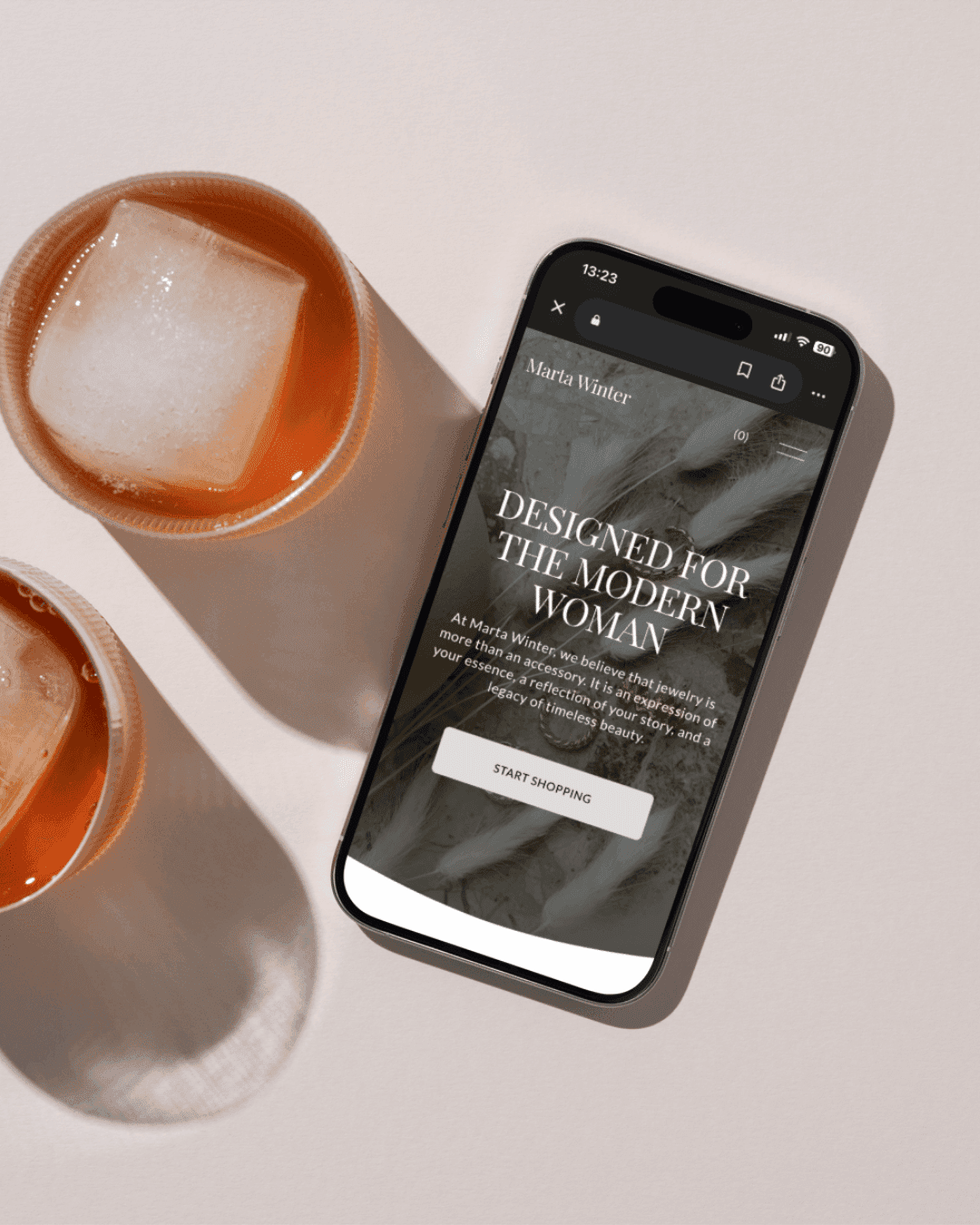
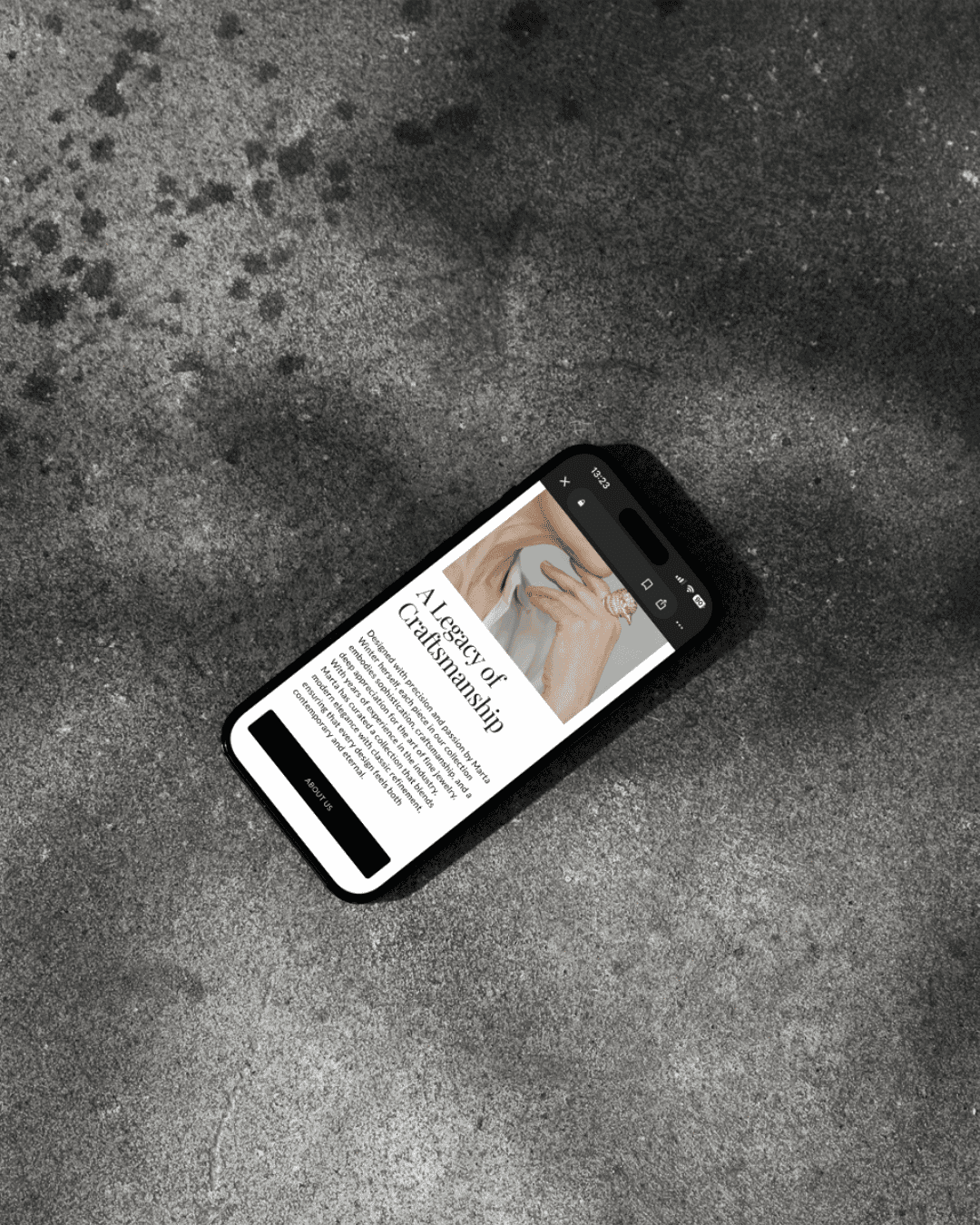
As part of a work test, I designed a homepage for a fictional jewelry brand. The task goal was to create a visually striking and user-friendly website that conveys luxury, tells the brand’s story, and drives sales. The project had an open brief, which presented the challenge of interpreting and defining the key design objectives. The brand would target "women aged 30-60 who seek artistic and sophisticated designs rather than trendy, mass-produced jewelry".
Project
Work test
Year
2025
Type
UI/WEB
Intro
Problem
📌 How do you craft a credible and engaging brand narrative for a fictional jewelry brand?
📌 How can design, typography, color choices, and content communicate luxury and exclusivity?
📌 How should the homepage be structured to balance inspiration and conversion?
Solution
I designed a luxury web experience for a fictional high-end jewelry brand as a work test, focusing on storytelling and conversion optimization to create an engaging and seamless customer journey.
Competitor analys
I started by analyzing existing luxury jewelry brands such as Efva attling, Cartier and Sophie Bille Brahe. I focused on understanding how they:
Use visual storytelling: Soft, natural imagery with neutral color tones.
Work with typography: They often a combination of serif and modern sans-serif fonts.
Structure their layouts: Clean, spacious, and minimalist designs.
Optimize for conversion: Clear "Shop Now" buttons and easy navigation.
Interviews
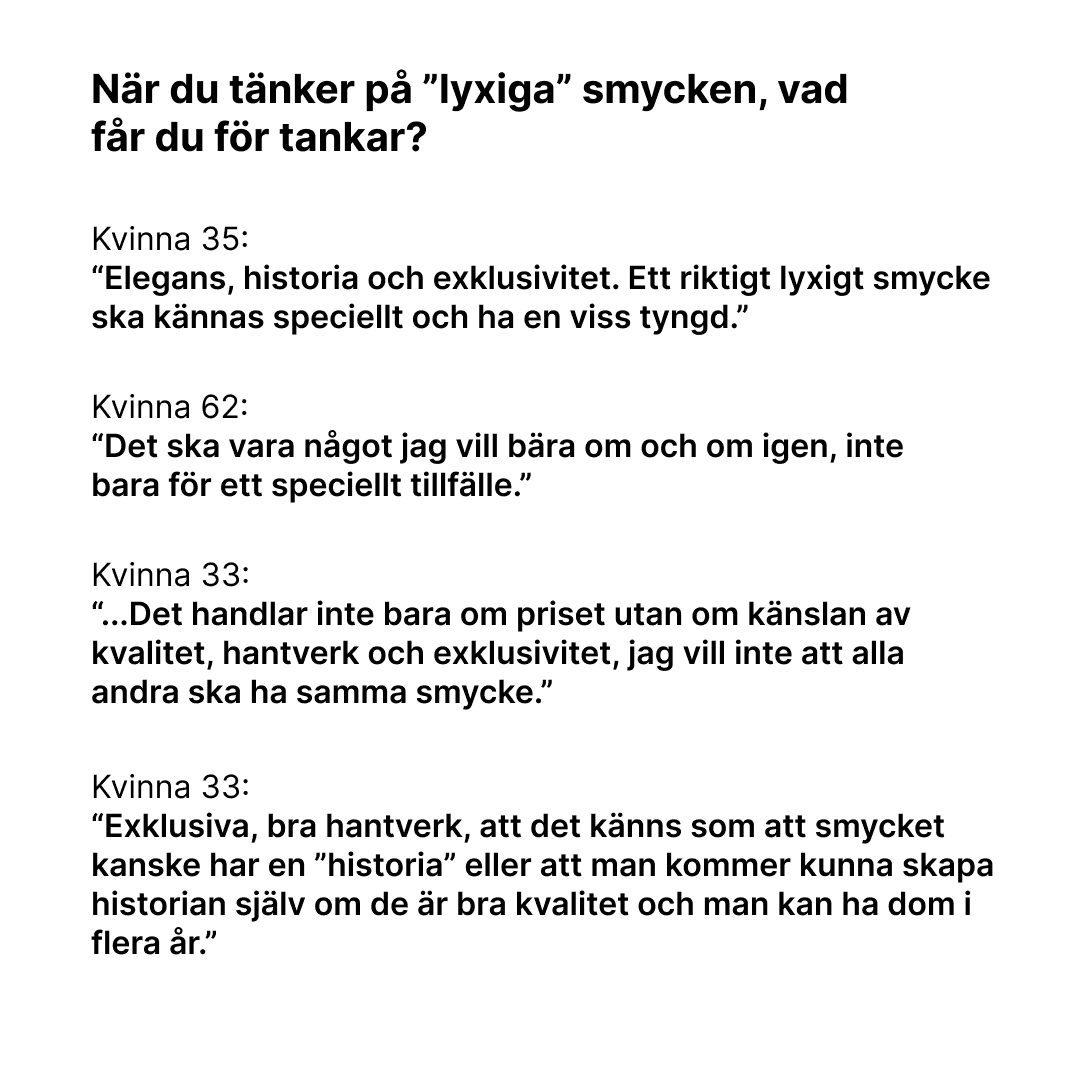
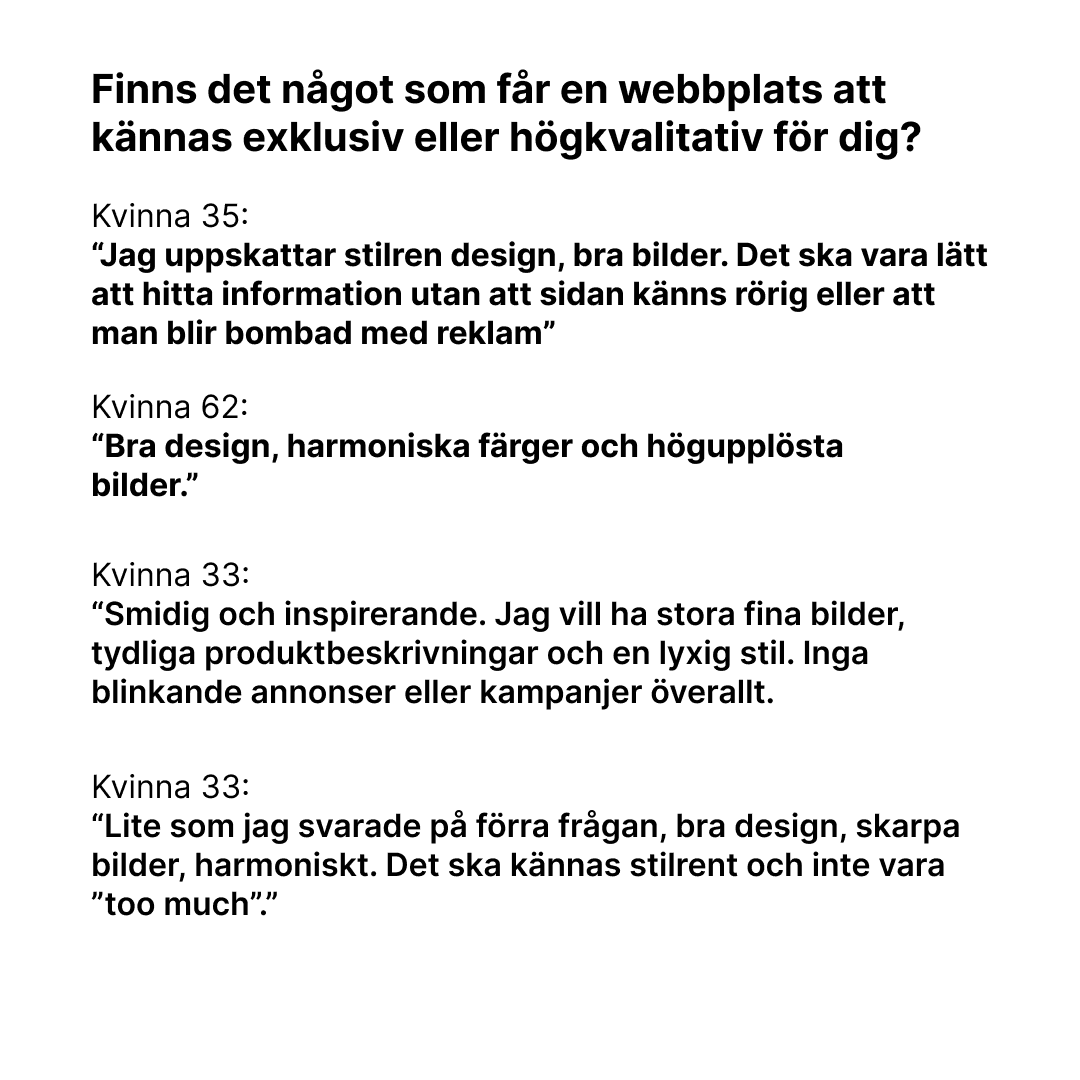
I interviewed 4 women between 30-60 years old. I asked 14 questions about their buying behavior, brands & premium feel, user experience & design to gain insights.
These were my insights:
Premium jewelry stores should probably invest in an aesthetically pleasing, easy-to-navigate website with high-resolution images, filter features, and inspiration that suits different target groups.
Social media is a powerful channel for reaching younger audiences, while storytelling and exclusive events can be more effective for older customers.
Optimizing the user experience with clear information, high-quality images, and a smooth purchasing process is crucial to maintaining the premium feel.
Design process
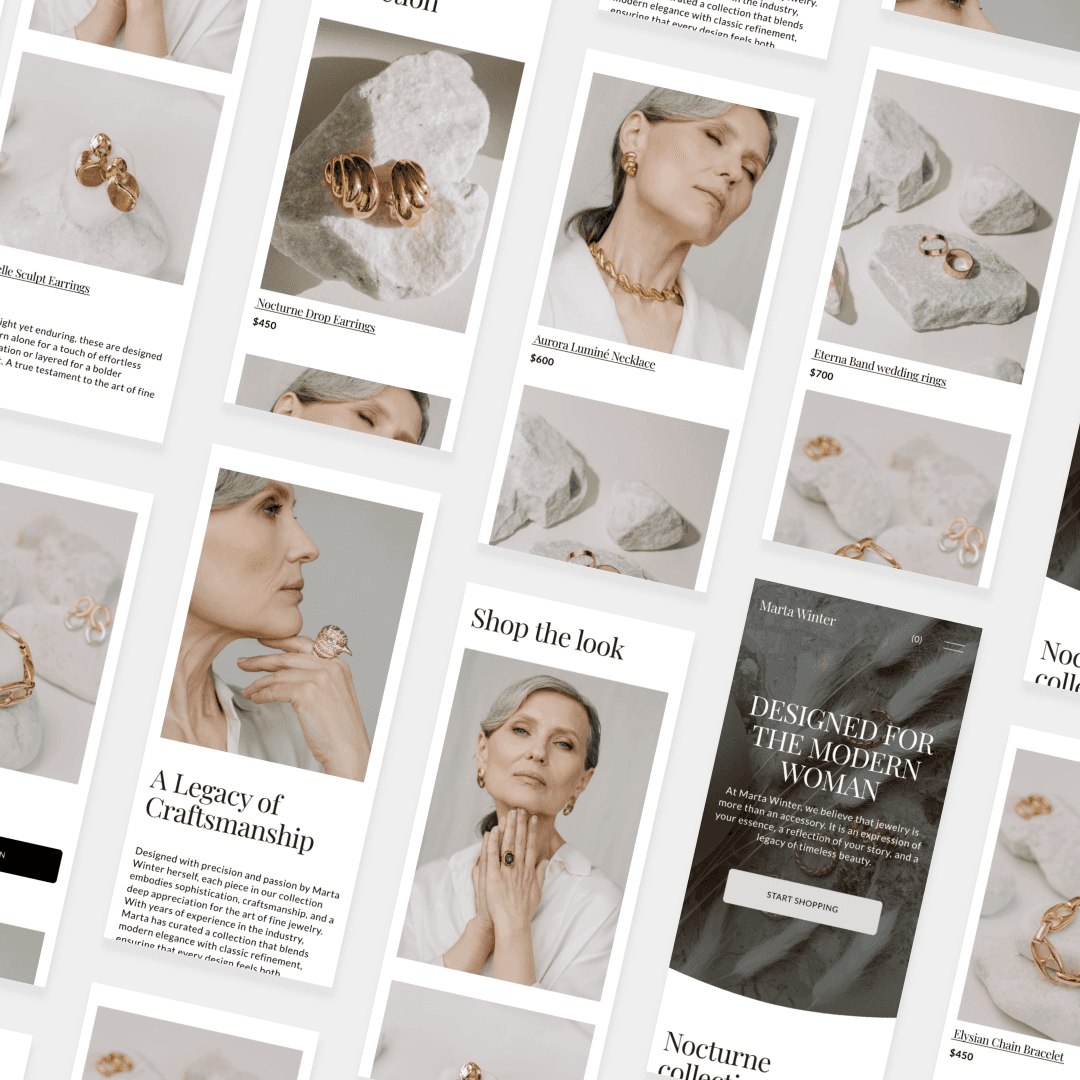
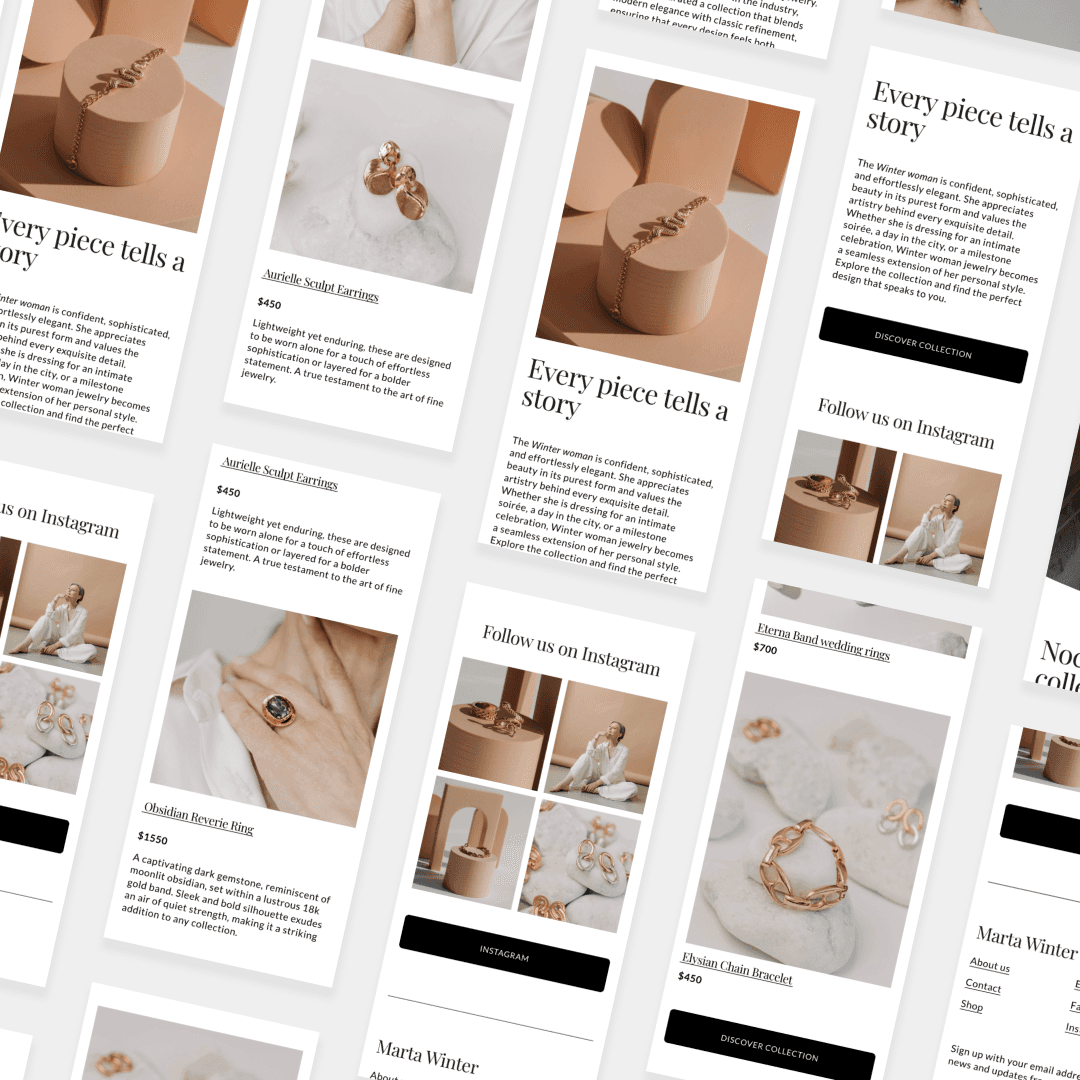
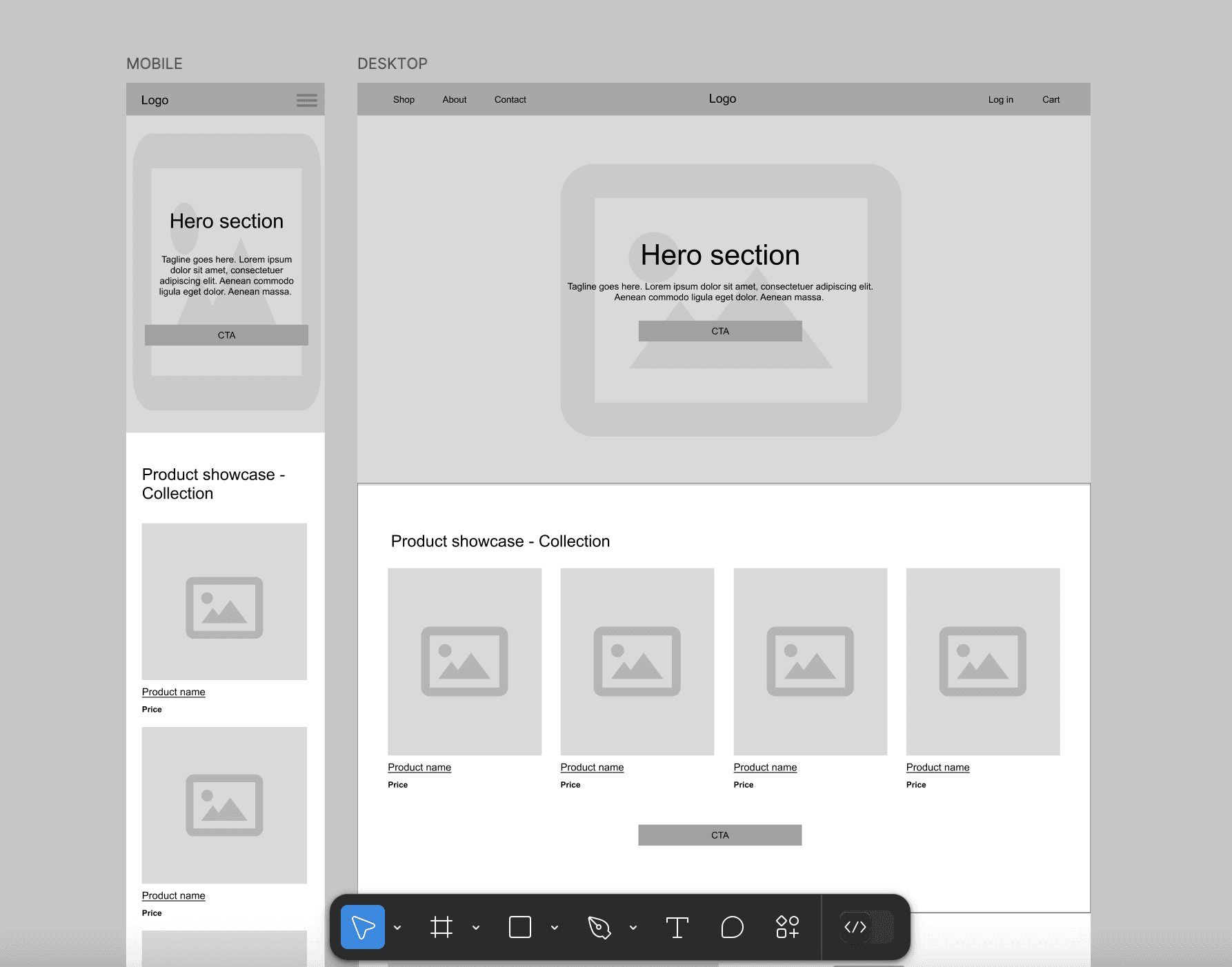
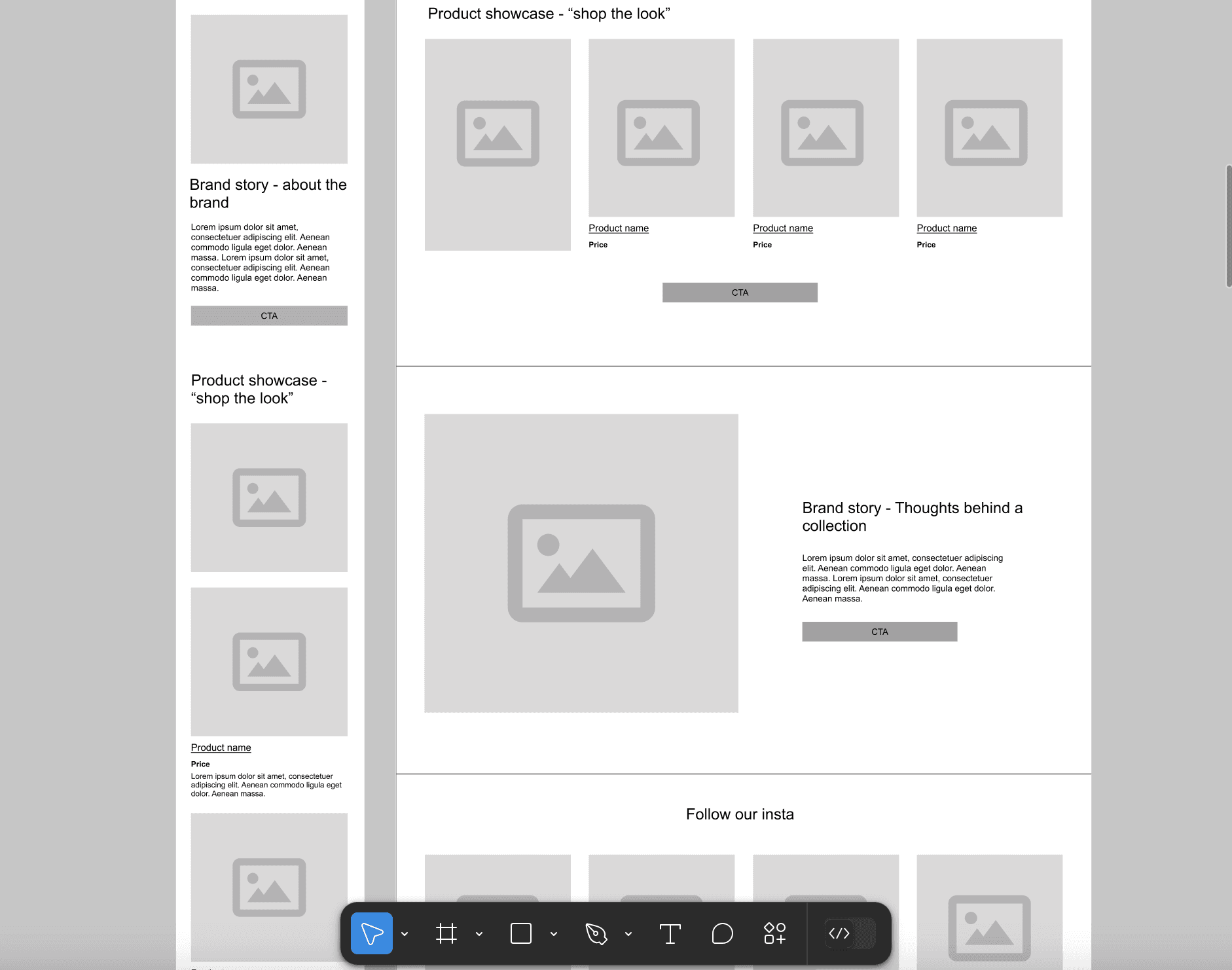
I began by sketching wireframes to define the layout. The focus was on creating a clear hierarchy and guiding the user naturally through the brand and its products. I started by creating simple wireframes in Figma to sketch out structure and functionality. I then created a UI design in Figma, and then moved on to building in SQ. During this process, the design was iterated in several steps. Sections were rebuilt to better meet the task's goals, UI elements were redesigned, and animations were added.
Final design
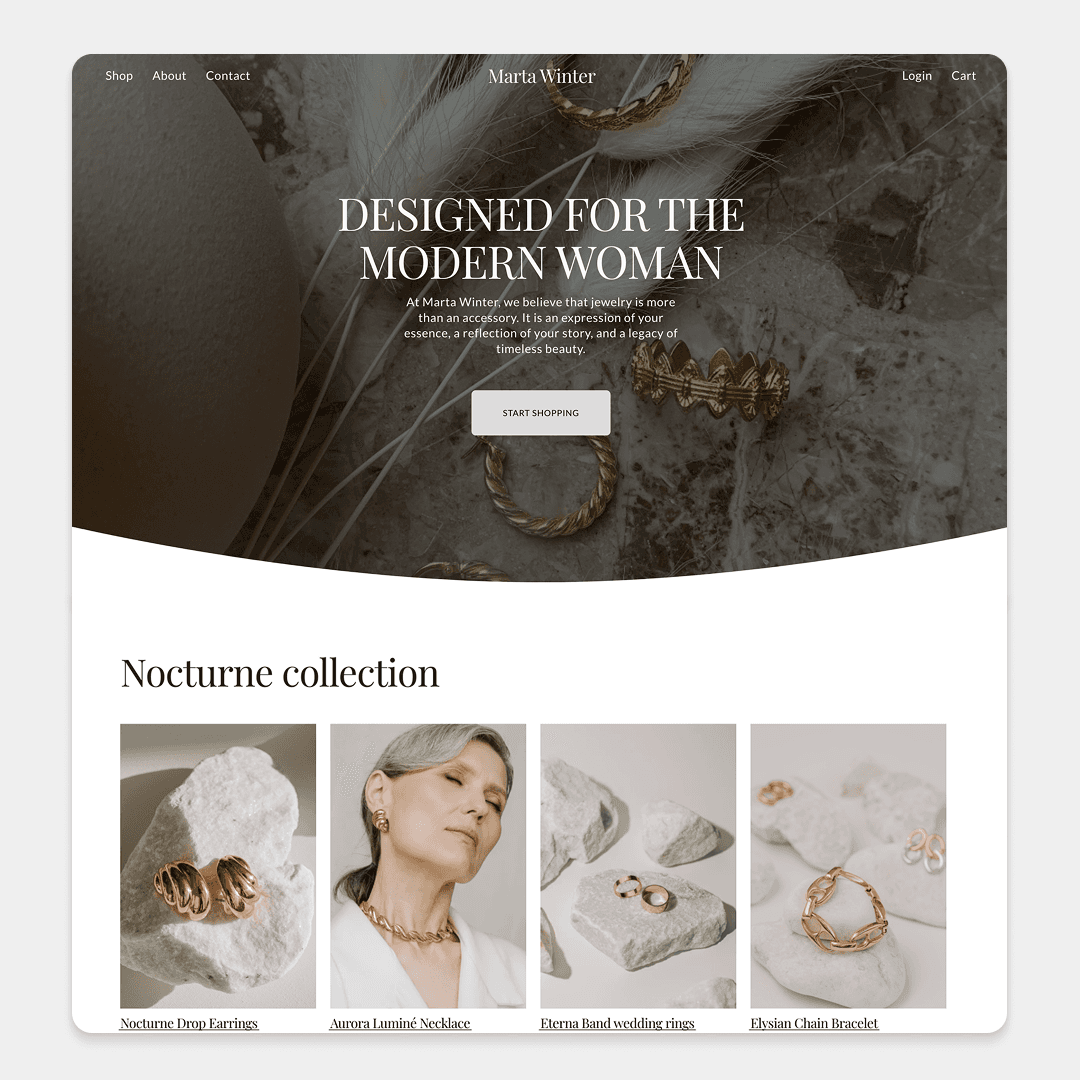
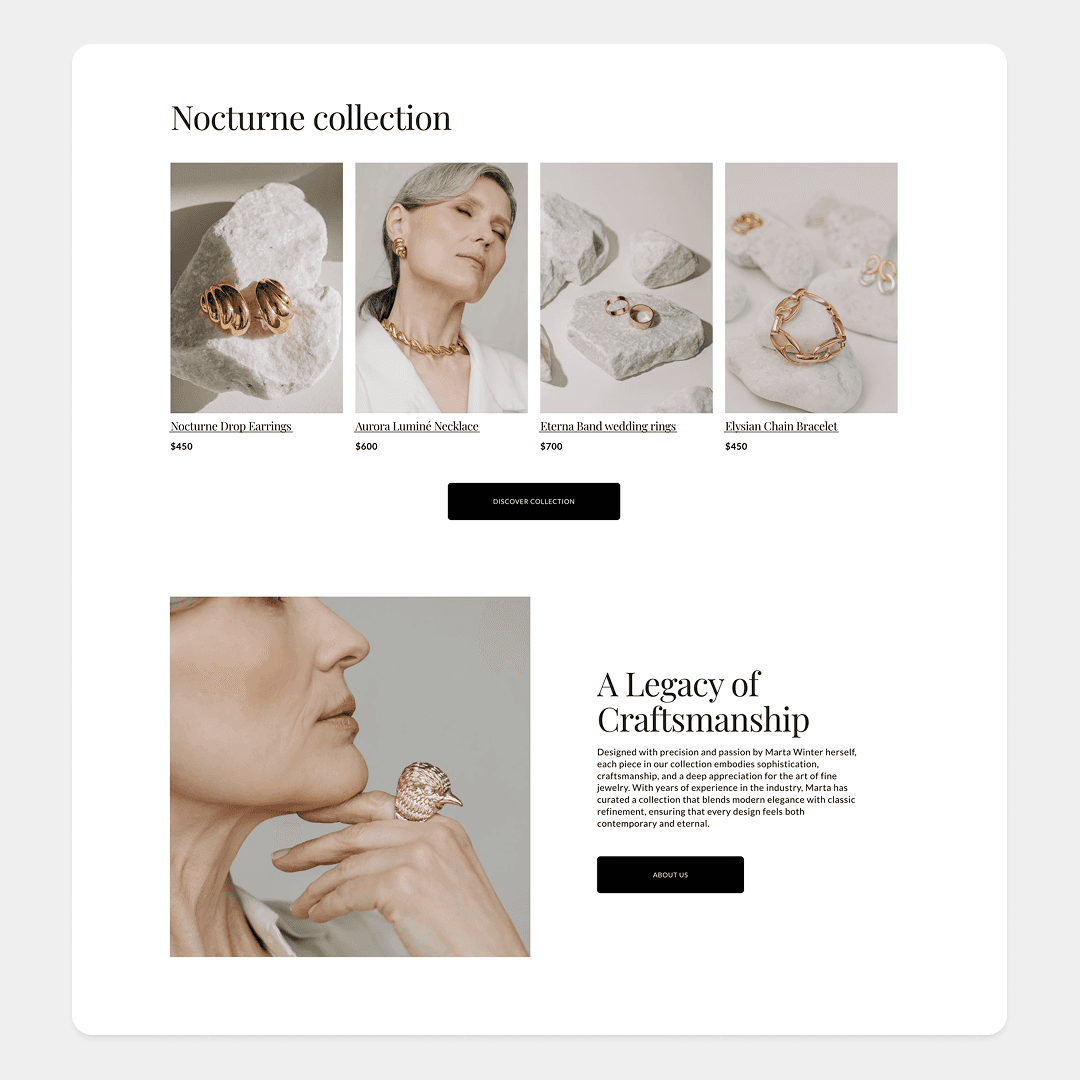
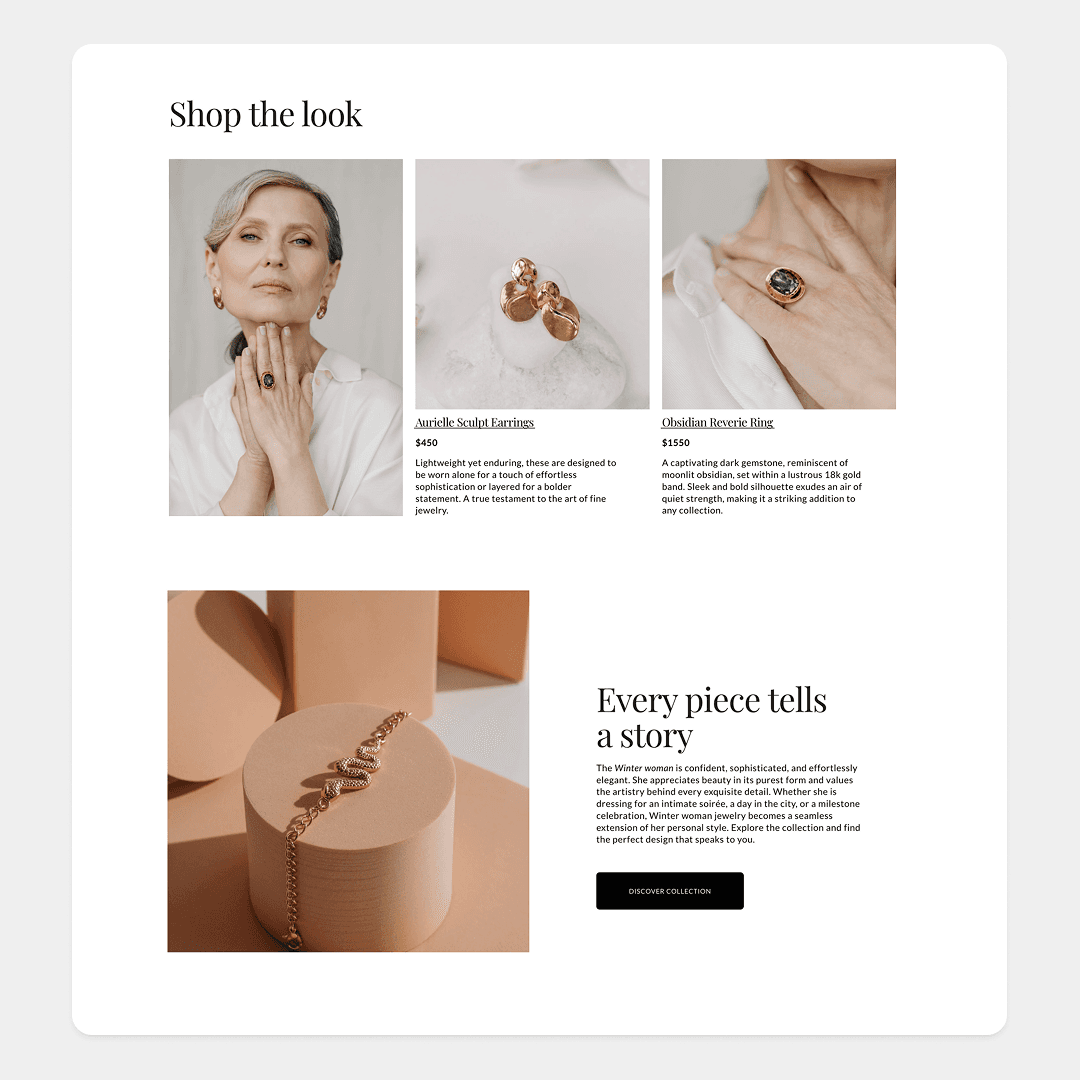
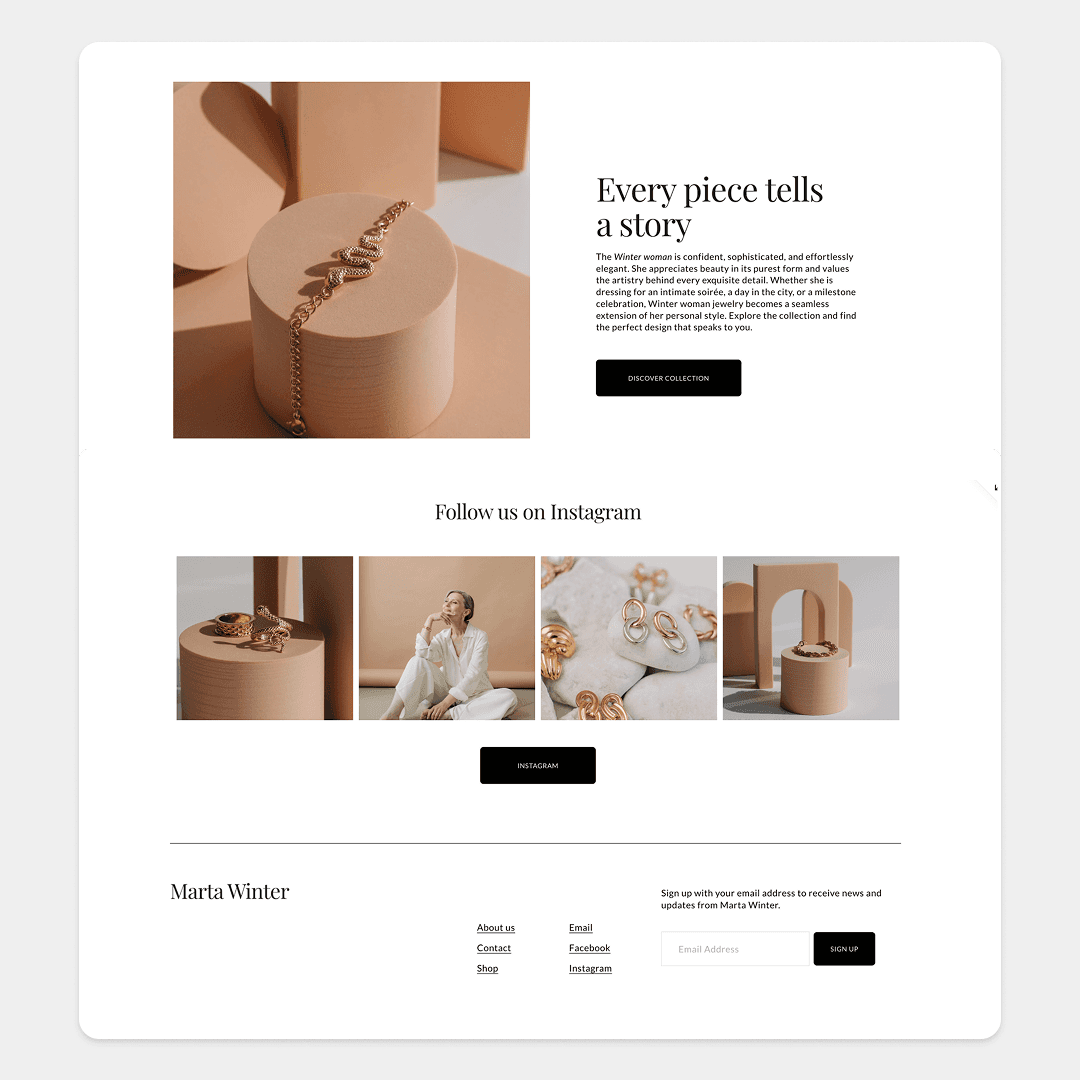
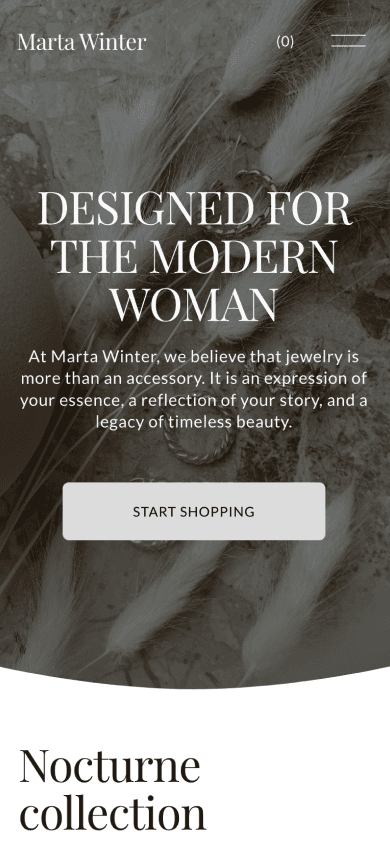
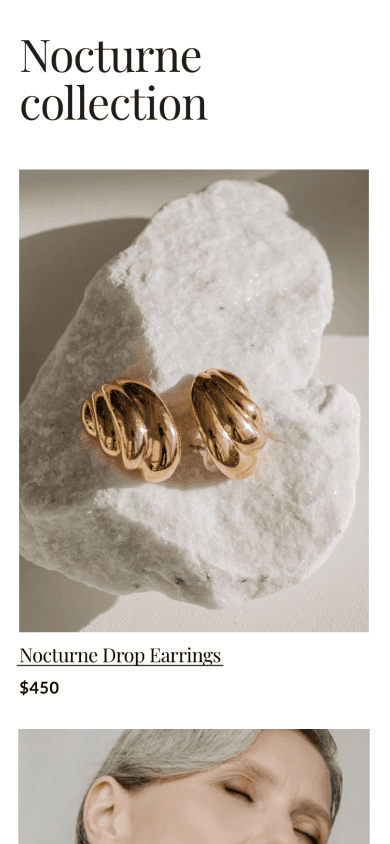
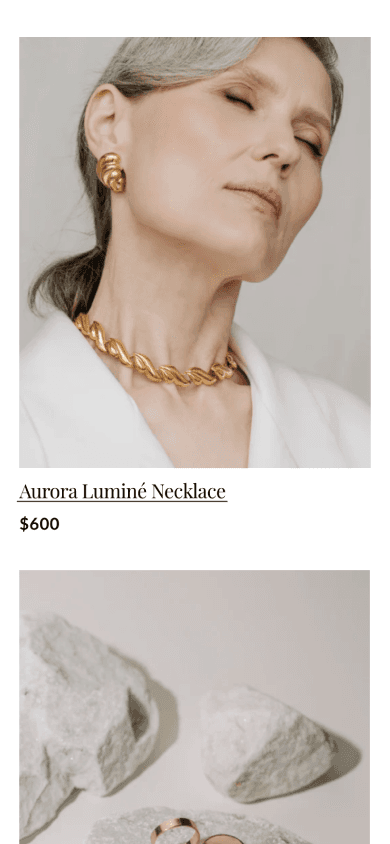
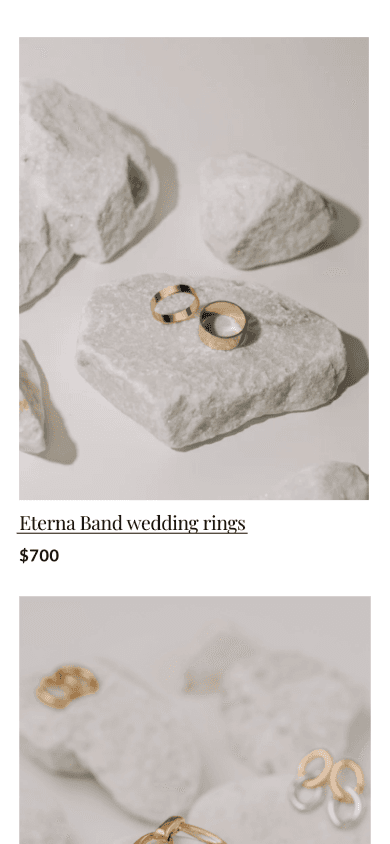
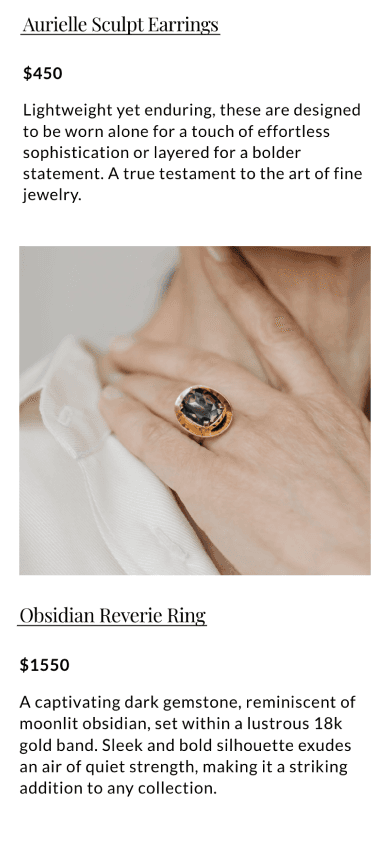
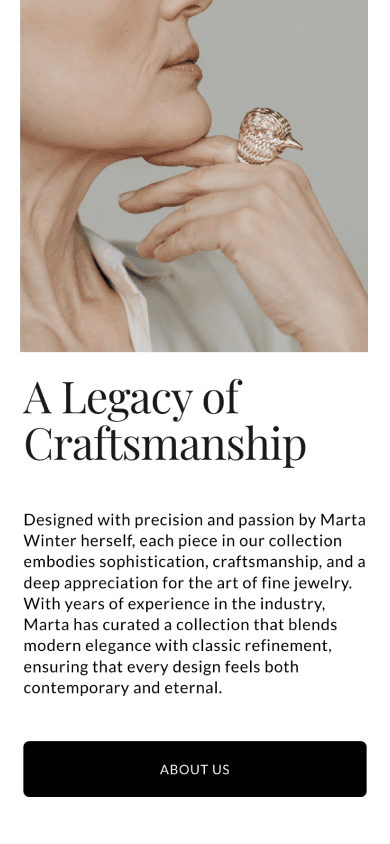
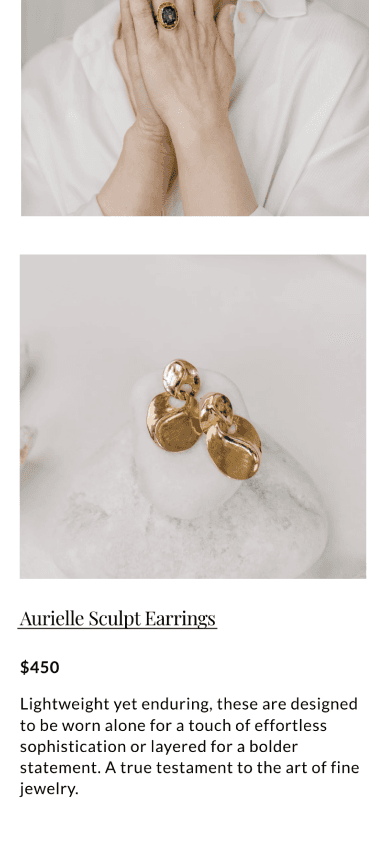
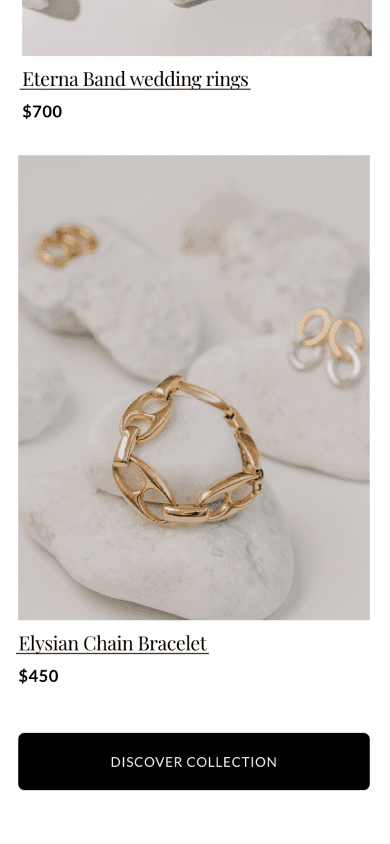
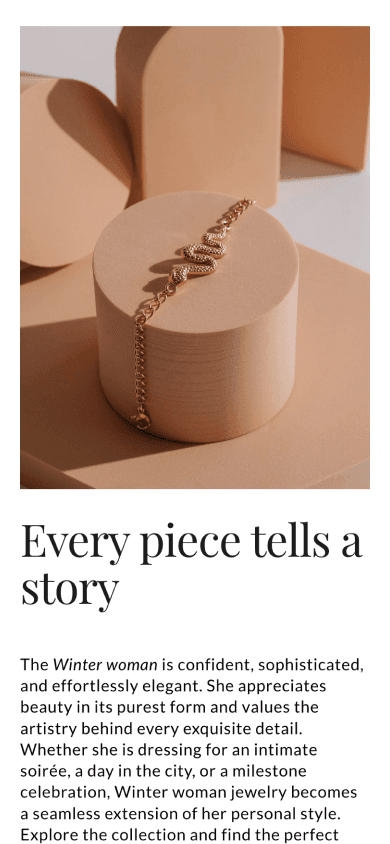
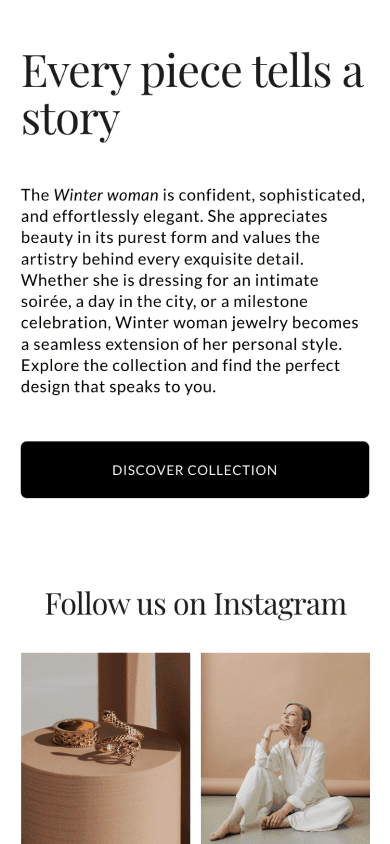
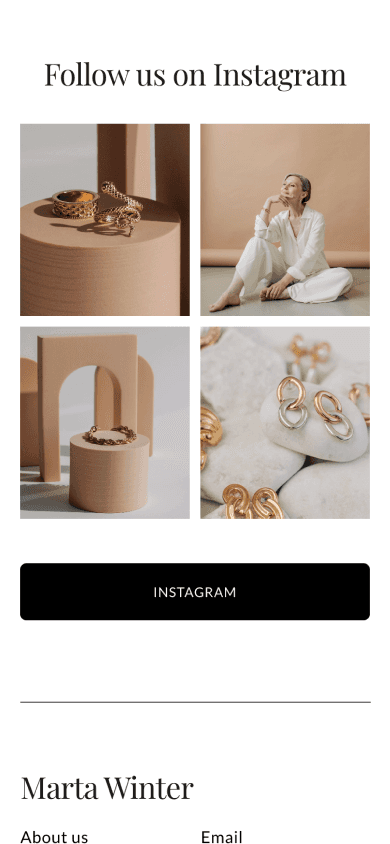
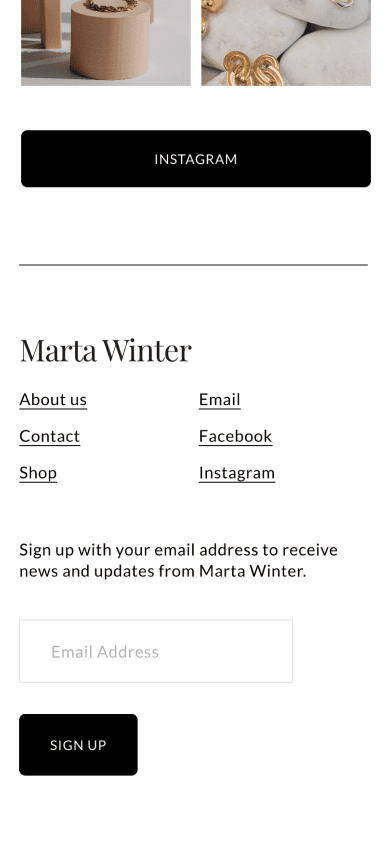
🎯 A mix of selling sections and brand storytelling sections.
🎯 The use of white space creates an exclusive feel.
🎯 High-quality visuals to build emotional engagement.
🎯 Clear CTAs encourage purchases or other actions.


Summary
📌 Designed a luxury website for a jewelry brand
📌 Focused on storytelling & conversion optimization
📌 Chose elegant photos & typography to create a premium vibe
📌 Used animations to enhance the user experience
📌 Designed wireframes in Figma.
📌 Built and delivered the work test in Squarespace
What would I focus on if I had more time?
💡Explore more interactive elements
💡 Conducting user testing would provide more insights.
Let's start creating together
Let's start creating together
Let's start creating together
Let's start creating together
Let's start creating together
Let's start creating together
Let's start creating together
Problem
📌 How do you craft a credible and engaging brand narrative for a fictional jewelry brand?
📌 How can design, typography, color choices, and content communicate luxury and exclusivity?
📌 How should the homepage be structured to balance inspiration and conversion?
Solution
I designed a luxury web experience for a fictional high-end jewelry brand as a work test, focusing on storytelling and conversion optimization to create an engaging and seamless customer journey.
Design process
I began by sketching wireframes to define the layout. The focus was on creating a clear hierarchy and guiding the user naturally through the brand and its products. I started by creating simple wireframes in Figma to sketch out structure and functionality. I then created a UI design in Figma, and then moved on to building in SQ. During this process, the design was iterated in several steps. Sections were rebuilt to better meet the task's goals, UI elements were redesigned, and animations were added.
Summary
📌 Designed a luxury website for a jewelry brand
📌 Focused on storytelling & conversion optimization
📌 Chose elegant photos & typography to create a premium vibe
📌 Used animations to enhance the user experience
📌 Designed wireframes in Figma.
📌 Built and delivered the work test in Squarespace
What would I focus on if I had more time?
💡Explore more interactive elements
💡 Conducting user testing would provide more insights.
Final design
🎯 A mix of selling sections and brand storytelling sections.
🎯 The use of white space creates an exclusive feel.
🎯 High-quality visuals to build emotional engagement.
🎯 Clear CTAs encourage purchases or other actions.
Interviews
I interviewed 4 women between 30-60 years old. I asked 14 questions about their buying behavior, brands & premium feel, user experience & design to gain insights.
These were my insights:
Premium jewelry stores should probably invest in an aesthetically pleasing, easy-to-navigate website with high-resolution images, filter features, and inspiration that suits different target groups.
Social media is a powerful channel for reaching younger audiences, while storytelling and exclusive events can be more effective for older customers.
Optimizing the user experience with clear information, high-quality images, and a smooth purchasing process is crucial to maintaining the premium feel.
Competitor
analysis
I started by analyzing existing luxury jewelry brands such as Efva attling, Cartier and Sophie Bille Brahe. I focused on understanding how they:
Use visual storytelling: Soft, natural imagery with neutral color tones.
Work with typography: They often a combination of serif and modern sans-serif fonts.
Structure their layouts: Clean, spacious, and minimalist designs.
Optimize for conversion: Clear "Shop Now" buttons and easy navigation.
Problem
📌 How do you craft a credible and engaging brand narrative for a fictional jewelry brand?
📌 How can design, typography, color choices, and content communicate luxury and exclusivity?
📌 How should the homepage be structured to balance inspiration and conversion?
Summary
📌 Designed a luxury website for a jewelry brand
📌 Focused on storytelling & conversion optimization
📌 Chose elegant photos & typography to create a premium vibe
📌 Used animations to enhance the user experience
📌 Designed wireframes in Figma.
📌 Built and delivered the work test in Squarespace
What would I focus on if I had more time?
💡Explore more interactive elements
💡 Conducting user testing would provide more insights.
Final design
🎯 A mix of selling sections and brand storytelling sections.
🎯 The use of white space creates an exclusive feel.
🎯 High-quality visuals to build emotional engagement.
🎯 Clear CTAs encourage purchases or other actions.
Design process
I began by sketching wireframes to define the layout. The focus was on creating a clear hierarchy and guiding the user naturally through the brand and its products. I started by creating simple wireframes in Figma to sketch out structure and functionality. I then created a UI design in Figma, and then moved on to building in SQ. During this process, the design was iterated in several steps. Sections were rebuilt to better meet the task's goals, UI elements were redesigned, and animations were added.
Competitor
analysis
I started by analyzing existing luxury jewelry brands such as Efva attling, Cartier and Sophie Bille Brahe. I focused on understanding how they:
Use visual storytelling: Soft, natural imagery with neutral color tones.
Work with typography: They often a combination of serif and modern sans-serif fonts.
Structure their layouts: Clean, spacious, and minimalist designs.
Optimize for conversion: Clear "Shop Now" buttons and easy navigation.
Interviews
I interviewed 4 women between 30-60 years old. I asked 14 questions about their buying behavior, brands & premium feel, user experience & design to gain insights.
These were my insights:
Premium jewelry stores should probably invest in an aesthetically pleasing, easy-to-navigate website with high-resolution images, filter features, and inspiration that suits different target groups.
Social media is a powerful channel for reaching younger audiences, while storytelling and exclusive events can be more effective for older customers.
Optimizing the user experience with clear information, high-quality images, and a smooth purchasing process is crucial to maintaining the premium feel.
Solution
I designed a luxury web experience for a fictional high-end jewelry brand as a work test, focusing on storytelling and conversion optimization to create an engaging and seamless customer journey.
Problem
📌 How do you craft a credible and engaging brand narrative for a fictional jewelry brand?
📌 How can design, typography, color choices, and content communicate luxury and exclusivity?
📌 How should the homepage be structured to balance inspiration and conversion?
Summary
📌 Designed a luxury website for a jewelry brand
📌 Focused on storytelling & conversion optimization
📌 Chose elegant photos & typography to create a premium vibe
📌 Used animations to enhance the user experience
📌 Designed wireframes in Figma.
📌 Built and delivered the work test in Squarespace
What would I focus on if I had more time?
💡Explore more interactive elements
💡 Conducting user testing would provide more insights.
Final design
🎯 A mix of selling sections and brand storytelling sections.
🎯 The use of white space creates an exclusive feel.
🎯 High-quality visuals to build emotional engagement.
🎯 Clear CTAs encourage purchases or other actions.
Design process
I began by sketching wireframes to define the layout. The focus was on creating a clear hierarchy and guiding the user naturally through the brand and its products. I started by creating simple wireframes in Figma to sketch out structure and functionality. I then created a UI design in Figma, and then moved on to building in SQ. During this process, the design was iterated in several steps. Sections were rebuilt to better meet the task's goals, UI elements were redesigned, and animations were added.
Interviews
I interviewed 4 women between 30-60 years old. I asked 14 questions about their buying behavior, brands & premium feel, user experience & design to gain insights.
These were my insights:
Premium jewelry stores should probably invest in an aesthetically pleasing, easy-to-navigate website with high-resolution images, filter features, and inspiration that suits different target groups.
Social media is a powerful channel for reaching younger audiences, while storytelling and exclusive events can be more effective for older customers.
Optimizing the user experience with clear information, high-quality images, and a smooth purchasing process is crucial to maintaining the premium feel.
Competitor
analysis
I started by analyzing existing luxury jewelry brands such as Efva attling, Cartier and Sophie Bille Brahe. I focused on understanding how they:
Use visual storytelling: Soft, natural imagery with neutral color tones.
Work with typography: They often a combination of serif and modern sans-serif fonts.
Structure their layouts: Clean, spacious, and minimalist designs.
Optimize for conversion: Clear "Shop Now" buttons and easy navigation.
Solution
I designed a luxury web experience for a fictional high-end jewelry brand as a work test, focusing on storytelling and conversion optimization to create an engaging and seamless customer journey.
Problem
📌 How do you craft a credible and engaging brand narrative for a fictional jewelry brand?
📌 How can design, typography, color choices, and content communicate luxury and exclusivity?
📌 How should the homepage be structured to balance inspiration and conversion?
Summary
📌 Designed a luxury website for a jewelry brand
📌 Focused on storytelling & conversion optimization
📌 Chose elegant photos & typography to create a premium vibe
📌 Used animations to enhance the user experience
📌 Designed wireframes in Figma.
📌 Built and delivered the work test in Squarespace
What would I focus on if I had more time?
💡Explore more interactive elements
💡 Conducting user testing would provide more insights.
Final design
🎯 A mix of selling sections and brand storytelling sections.
🎯 The use of white space creates an exclusive feel.
🎯 High-quality visuals to build emotional engagement.
🎯 Clear CTAs encourage purchases or other actions.
Design process
I began by sketching wireframes to define the layout. The focus was on creating a clear hierarchy and guiding the user naturally through the brand and its products. I started by creating simple wireframes in Figma to sketch out structure and functionality. I then created a UI design in Figma, and then moved on to building in SQ. During this process, the design was iterated in several steps. Sections were rebuilt to better meet the task's goals, UI elements were redesigned, and animations were added.
Competitor
analysis
I started by analyzing existing luxury jewelry brands such as Efva attling, Cartier and Sophie Bille Brahe. I focused on understanding how they:
Use visual storytelling: Soft, natural imagery with neutral color tones.
Work with typography: They often a combination of serif and modern sans-serif fonts.
Structure their layouts: Clean, spacious, and minimalist designs.
Optimize for conversion: Clear "Shop Now" buttons and easy navigation.
Interviews
I interviewed 4 women between 30-60 years old. I asked 14 questions about their buying behavior, brands & premium feel, user experience & design to gain insights.
These were my insights:
Premium jewelry stores should probably invest in an aesthetically pleasing, easy-to-navigate website with high-resolution images, filter features, and inspiration that suits different target groups.
Social media is a powerful channel for reaching younger audiences, while storytelling and exclusive events can be more effective for older customers.
Optimizing the user experience with clear information, high-quality images, and a smooth purchasing process is crucial to maintaining the premium feel.
Solution
I designed a luxury web experience for a fictional high-end jewelry brand as a work test, focusing on storytelling and conversion optimization to create an engaging and seamless customer journey.